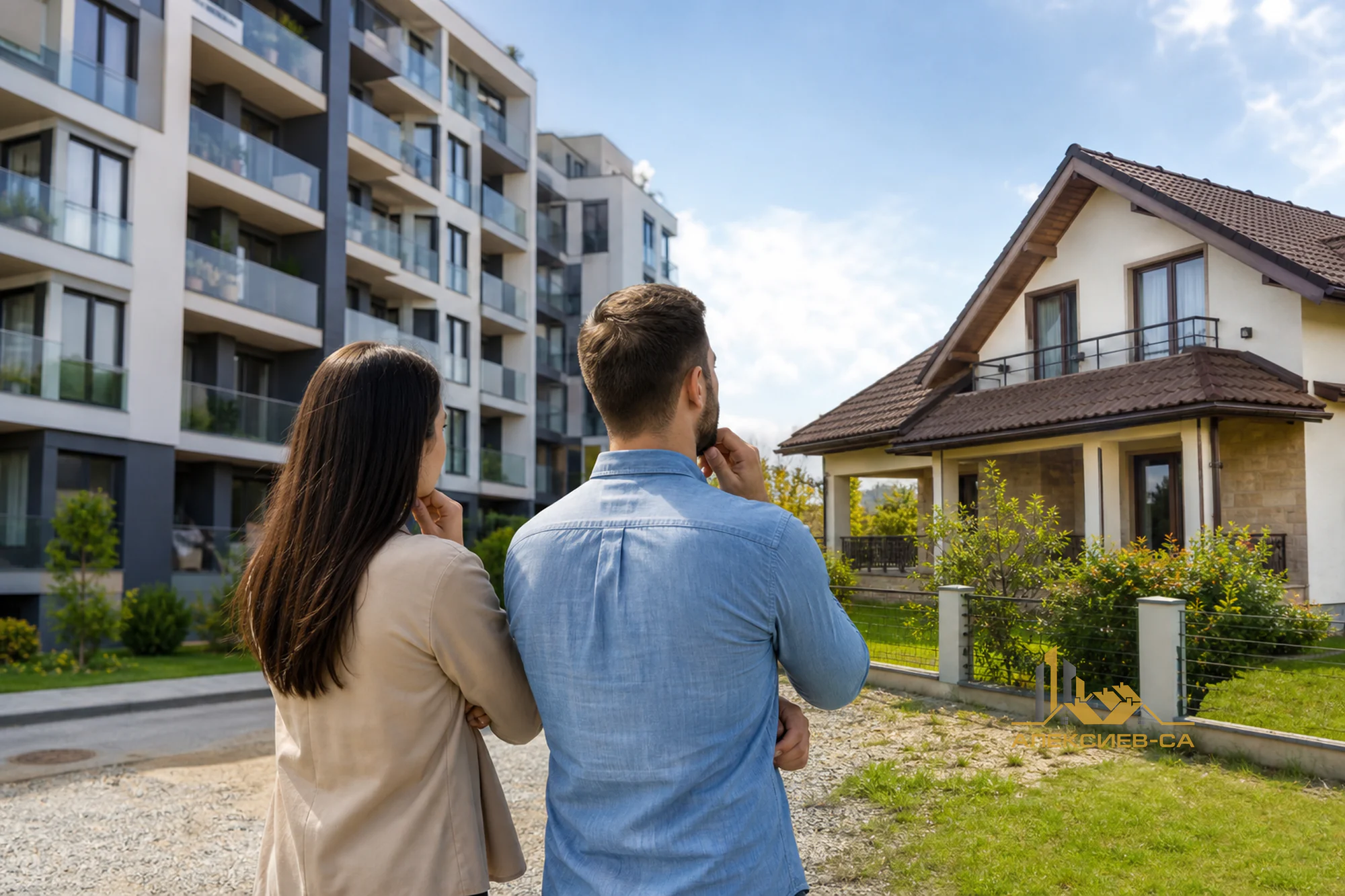
House or apartment – there is no universally right choice
Choosing between a house and an apartment rarely comes down to floor area or the advertised price alone. It is a decision about everyday life: how your morning starts, how much time you spend travelling, where children play, how you work from home and which responsibilities you are prepared to take on over the years. A home should be comfortable not only on the day you buy it or begin construction, but also as your household’s needs change.
A house usually brings more independence, outdoor space and freedom of organisation. An apartment often provides closer access to urban services, a more compact routine and fewer individual responsibilities for the building. Neither option is automatically better. The suitable option is the one that combines a realistic budget, a good location and a lifestyle you can maintain comfortably.
Before comparing specific properties or plots, define your priorities. Ask yourself what you would not want to compromise on: travel time, a separate work room, a yard, proximity to school, quiet, a lift, easy access or the ability to make future changes. This makes the question of “house or apartment” specific and useful.
Start with everyday life, not with an ideal image
The image of a house with a yard or an apartment in a lively neighbourhood can be appealing, but the actual decision should be based on your normal weekly routine. Track how you move between work, school, kindergarten, shops, sport, healthcare and relatives. Include peak traffic hours rather than only weekend travel.
A house can be a good choice for people who value privacy, open space and the opportunity to organise their property independently. It may provide separate areas for family, guests, hobbies or work. These advantages also come with a commitment to the yard, access, seasonal maintenance and coordination of more elements around the building.
An apartment may suit households that prefer services within walking distance or a short journey. Living in a residential building often makes transport, shops and urban life easier to access. In return, you need to accept common areas, proximity to neighbours and limitations that may apply to more substantial changes in the home.
Make a list with three categories: essential conditions, desirable conveniences and things you are willing to give up. Separate personal preferences from practical needs. For example, a yard may be essential for one family, while a balcony, a nearby park and free time without caring for a garden may be more valuable for another.
Space, layout and personal privacy
With a house, the advantage is not only potentially greater floor area. What matters is the ability to separate functions: a living area, bedrooms, storage, a laundry room, a study and guest space. A well-considered layout allows different family members to use the home at the same time without disturbing each other. Outdoor space can extend the living area during warmer months.
However, more space has value only when it is functional. Large rooms with inconvenient connections, too many corridors, insufficient storage or unprotected outdoor areas can make a home harder to use. When planning a house, it is sensible to consider circulation, natural light, orientation, the connection to the yard and space for technical systems from the earliest stage.
An apartment usually requires more careful use of every square metre. A quality layout can provide comfort in a more compact home, especially when there is adequate storage, good light and a clear boundary between the living and quiet areas. Do not compare only the number of rooms. Check actual dimensions, furnishing options, the position of sanitary rooms and the availability of a balcony, basement or other supporting space.
Personal privacy is also experienced differently. In a house, you often have more control over property boundaries and noise. In an apartment, the quality of the environment also depends on the building, common areas and neighbouring homes. During a viewing or planning process, pay attention to views, distances, the entrance, the noise environment and how rooms will be used at different times of day.
A yard is an opportunity, but also a continuing commitment
A yard is one of the strongest arguments for a house. It can be a place for play, rest, outdoor dining, gardening or simply visual distance from neighbours. For families with children and pets, outdoor space is often an important part of quality of life. It offers freedom that is difficult to recreate in an apartment.
At the same time, a yard is not a finished product that requires no time. It needs decisions about paving, landscaping, irrigation, drainage, fencing, lighting and seasonal maintenance. Trees, lawns and outdoor features need care. On sloping land, in periods of heavy rain or where soil conditions are specific, water management and drainage become even more important.
It is useful to assess which part of the yard you will actually use and how much time you are prepared to devote to it. A small, well-organised yard may be more convenient than a large plot that is difficult to maintain. Review orientation, shade, vehicle access, waste storage and the connection between the entrance, parking and the main outdoor area.
For an apartment, a balcony, terrace, nearby park or shared green spaces may be sufficient for people who want contact with the outdoors without the daily responsibility of a private yard. This is not a lower-quality choice; it simply distributes time and responsibilities differently.
Location, infrastructure and travel time
Location can change the value of every advantage and disadvantage. A house in a quiet place with pleasant surroundings may be excellent for rest and family life, but the distance to work, school and services should be measured realistically. Daily journeys accumulate in time, costs and organisation, particularly when household members have different schedules.
Before choosing a house or plot, examine access in all seasons and at different times of day. Check how you reach it on foot, by car and by public transport where relevant. It is important to understand the available infrastructure, road condition, lighting, parking possibilities and practical proximity to services you use regularly.
An apartment in an urban environment often benefits from short routes and predictability. Proximity to shops, educational facilities, healthcare and workplaces can free up time for the family. Here too, however, the specific micro-location is decisive: a busy street, difficult parking, noise or insufficient green areas can significantly affect comfort.
Do not assess an area only by how it looks during one viewing. Visit in the morning, evening and on a day off. See how it feels in rain, traffic and after dark. If the home will be used long term, also consider accessibility in the event of temporary or permanent changes to family members’ mobility.
Compare total cost, not only the initial price
The purchase price, plot value or initial construction budget is only the beginning of the financial picture. For a house, you should allow for elements around the building itself: site preparation, access, external connections, fencing, yard, paving and solutions specific to the property. Depending on the design and conditions, different technical works may also be needed, even though they are not visible in an early overall estimate.
Costs should not be treated as identical for every property. The shape and features of the terrain, available infrastructure, architectural solution, materials and desired level of completion all affect the budget. It is therefore more sensible to work with a phased breakdown and allow a reserve for unforeseen circumstances than to compare two options using only one final indicative sum.
With an apartment, there are costs related to common areas and building management in addition to the price of the dwelling. Future work on shared building elements may also be required and decided jointly by owners. A smaller scope of personal care does not mean no costs; it means a different way in which they are planned and shared.
Create a personal scenario for monthly and annual costs. Include transport, parking, heating or cooling, maintenance, the yard, common areas and planned improvements. The most useful comparison shows not only whether you can acquire the home, but whether you can occupy and maintain it comfortably.
Maintenance: individual control versus shared responsibility
A private house gives you more control over decisions. You can plan when and how to renew the facade, roof, fence, yard or installations without waiting for a collective condominium decision. This is valuable for people who prefer to set their own priorities and the pace of improvements.
Control, however, comes with full responsibility for monitoring and organisation. The roof, facade, drainage, external paving, fence and technical systems need periodic inspection. Discovering a small issue in time usually allows a calmer repair plan. Delaying visible signs of moisture, leaks or wear can make subsequent work more complicated.
In an apartment, part of the care concerns the common building and is shared with neighbours. This can reduce the burden on the individual owner, but it requires communication and coordination. Inside the dwelling, personal decisions still remain for installations, flooring, sanitary rooms, finishing work and furnishing.
When assessing an option, do not ask only, “How much will maintenance cost?” Also ask, “Who will organise it, how much time will it take and how will we respond to a problem?” The answer should match your skills, available time and willingness to coordinate contractors when necessary.
If you choose a house: what to check about the plot and terrain
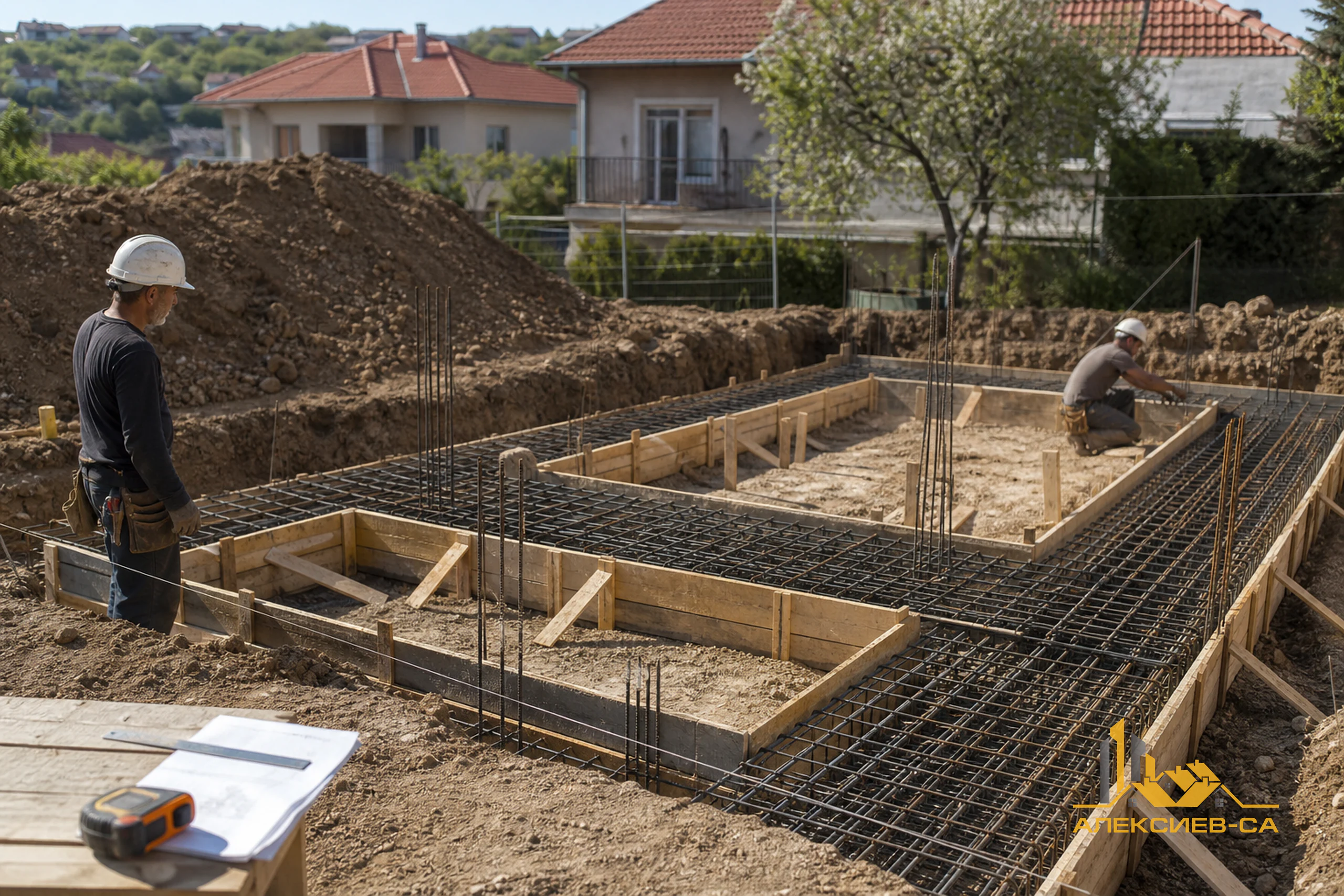
When a house is to be built, the plot is a fundamental part of the decision, not simply a place on which to put a design. Before making final plans, it is important to investigate the property status, development possibilities, access and available infrastructure. The specific checks should be carried out with the appropriate professionals for the individual case.
Examine the relief carefully. Level ground is not always the only advantage, and sloping ground is not necessarily a disadvantage, but both affect the organisation of the building and yard. Changes in level, water runoff, soil characteristics, neighbouring properties and access for machinery can affect the complexity of implementation.
Orientation matters for natural light, comfort in rooms and the way you will use the yard. Consider where the living area, bedrooms, entrance, parking, storage and relaxation spaces will be located. Do not leave these questions until after selecting a finished design, because a good design should respond to the specific terrain.
Also check practical details: the width and condition of access, the possibility of servicing the property, the availability of utilities and the relationship with the surrounding environment. An informed decision at the beginning reduces the risk that a preferred home idea will prove inconvenient or too complex for the particular location.
Flexibility, alterations and working from home
Housing needs change. An additional room may initially be a study, then a child’s room or a hobby space. An elderly parent may need easier access. Working from home may require a quiet area, well-organised light and space for meetings. Therefore, consider the home as a system that needs to work across different life scenarios.
A house often offers more opportunities for adaptation, but these depend on the design, structural solution, plot and available space. Do not assume that every extension or alteration will be easy. A better approach is to provide logical storage, a flexible room and sufficiently convenient links between zones from the outset.
In an apartment, options for change are usually more limited by the structure, installations, area and building rules. This does not rule out a quality renovation. A good interior plan, functional furniture and precise finishing solutions can significantly improve the feeling of space. However, any more substantial intervention should be assessed professionally in advance.
Ask whether the home can accommodate at least two future changes without major compromise. If the answer is yes, you are probably considering a more resilient option. Flexibility does not mean maximum floor area; it means sensible layout and the ability of the home to follow your life.
Comfort, energy efficiency and quality of execution
Comfort does not depend only on the property type. The quality of design, execution, insulation, windows, roof, installations and finishing details affects temperature, noise, moisture and ease of living every day. A house with poorly considered technical solutions can create ongoing responsibilities, just as an apartment in a building with compromised common elements can limit comfort.
With a house, you have the opportunity to view the building as an integrated system. The relationship between structure, roof, facade, thermal and waterproofing insulation, electrical and plumbing installations should be coordinated. Decisions made at an early stage affect future maintenance and the ability of the different systems to work well together.
With an apartment, inspect not only the dwelling but also the condition of the building, orientation, ventilation, common areas and possible noise sources. If the property is to be renovated, plan the sequence of work so that installations, insulation solutions and finishing work are not carried out chaotically or repeated.
Do not choose only by visual impression. Ask questions about visible details, seek clear information about condition and plan professional consultation when the decision is significant. Long-term comfort is usually defined by the invisible but well-executed parts of a home.
Long-term planning: family, accessibility and future value
A useful horizon for this decision is at least several years ahead. You do not need to predict every future detail, but it is sensible to consider possible changes: family growth, remote work, a need for easier mobility, changes in income or a wish to rent out or sell the home in the future.
A house may have strong value for buyers seeking independence, a yard and more space, but interest will also depend on location, access, condition and the practicality of the property. An apartment may be preferred because of convenient urban life and easier daily organisation, yet the quality of the building and the specific area remain decisive.
Future value is not certain and should not be the sole criterion. It is more useful to assess whether the home retains its functionality in different scenarios. A home with a good location, clear layout, reasonable maintenance costs and quality execution is generally easier to live in and present when a future change occurs.
Avoid allowing the decision to be driven by a temporary trend or pressure to choose quickly. Compare the options by the same criteria and give weight to what matters most to your family. This reduces the risk of paying for conveniences you will not use or underestimating a need that will arise every day.
A practical way to make the decision
Bring the information together in a simple comparison. For each option, rate it according to your priorities: location, travel time, personal space, yard or outdoor area, parking options, condition, maintenance, total costs, flexibility and proximity to important services. Not all criteria need equal weight. If you work from home, a quiet study may matter more than an extra terrace; if you have young children, safe outdoor access may be decisive.
Then perform a real-life routine test. Travel from the location you are considering to key destinations. Spend time in the area. Imagine where you will leave groceries, how you will welcome guests, where laundry will dry, how storage will be organised and what will happen in bad weather. It is the small, repeated actions that show whether a home will be convenient.
If you are planning construction or substantial completion work, involve specialists early enough. A clear discussion about terrain, stages, technical solutions and the desired result helps create a realistic plan. With an existing property, a professional inspection and good assessment of the required work can make the comparison between options much more accurate.
The best decision is not necessarily the largest house or the most central apartment. It is the home where location, space, costs and responsibilities are balanced with your lifestyle.
Planning a house or completion work for a home?
Discuss with a construction team what matters for your project, plot and desired level of completion.
Frequently asked questions
Frequently asked questions
Which is better for a family – a house or an apartment?
It depends on the family’s daily routine. A house provides more private and outdoor space, while an apartment often makes schools, services and urban infrastructure easier to reach.
Is maintaining a house more expensive than maintaining an apartment?
A house usually requires more individual care for the roof, facade, yard, fence and external systems. In an apartment, some maintenance is shared, but there are still costs and joint decisions.
What should I check before buying a plot for a house?
Check the property status and development possibilities, access, infrastructure, relief, water drainage and terrain features. For a specific property, consulting appropriate professionals is sensible.
Does a house make sense if I work in the city every day?
It can, if travel time and travel organisation are acceptable for you. Calculate real routes during peak hours and include transport costs in the overall evaluation of your choice.
How can I compare total costs for a house and an apartment?
Make separate lists for acquisition, completion work, transport, heating or cooling, maintenance, common areas, the yard and future improvements. Compare the costs of living in the home, not only the starting price.
Can an apartment be a good long-term choice?
Yes, when the layout, location and building meet your future needs. Flexible furnishing, good storage and proximity to services can provide lasting comfort.