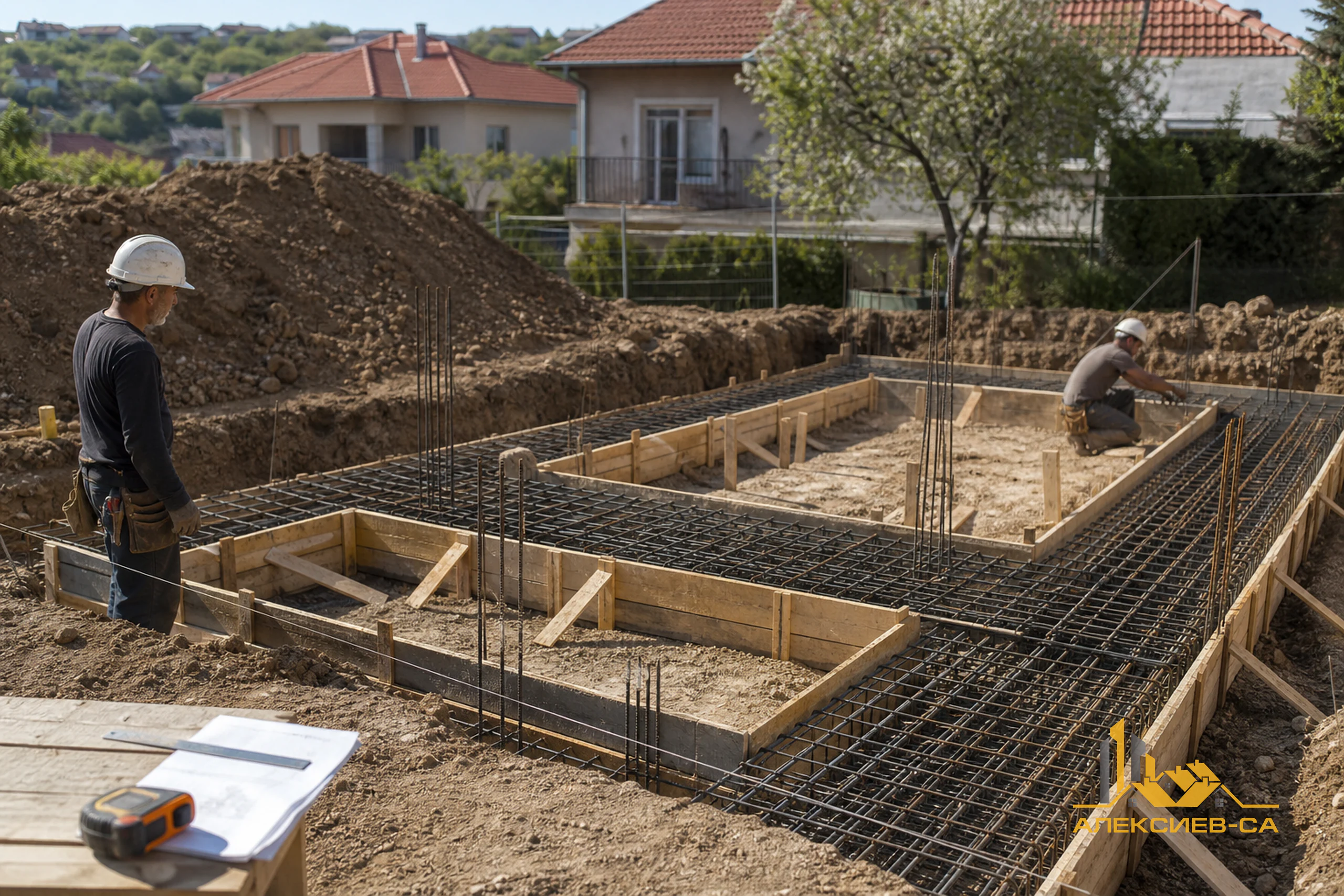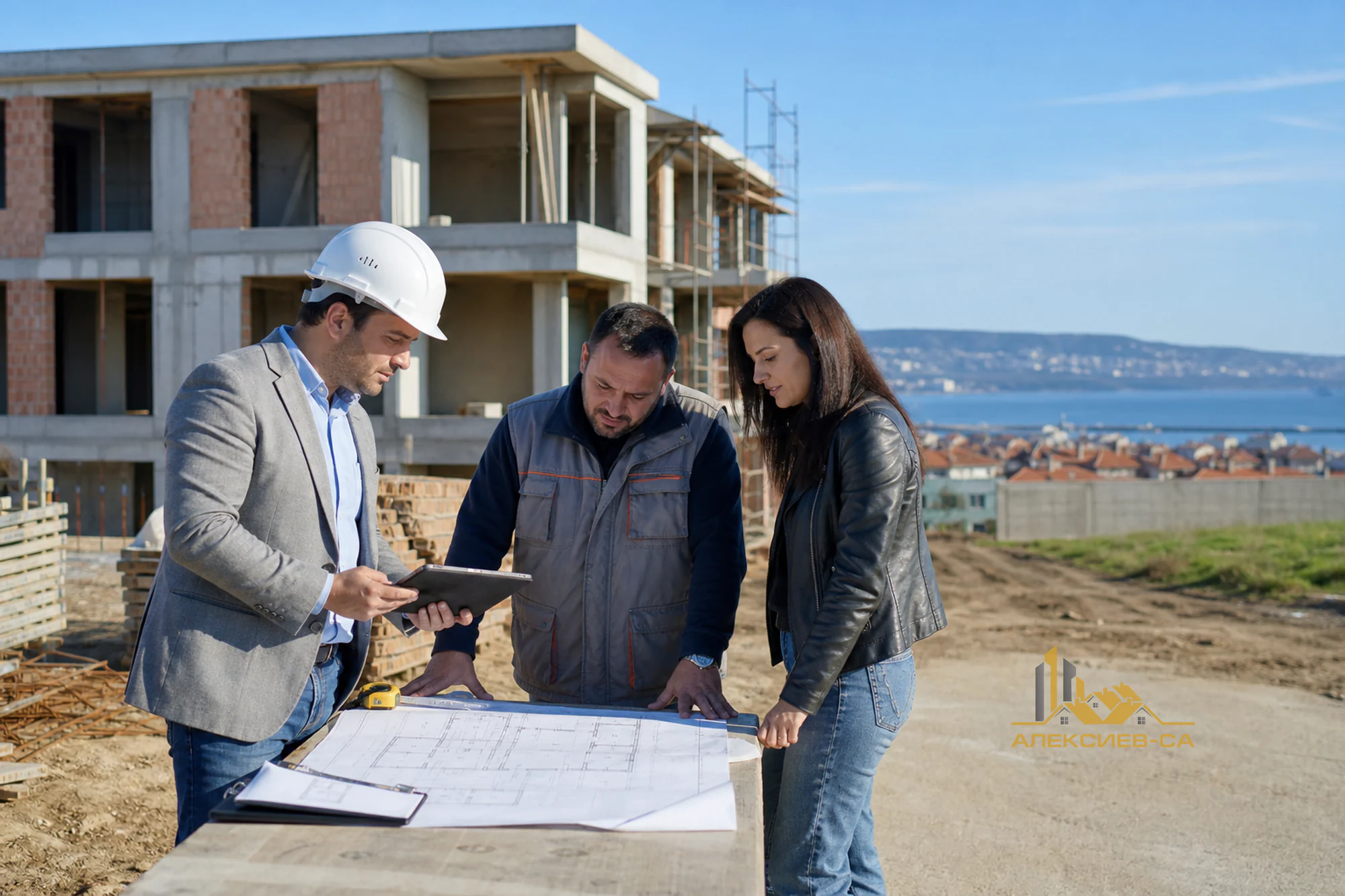
Choosing a construction company is a key decision
Choosing a construction company is one of the most important decisions when building a house, carrying out rough construction, completing finishing works, renovating an apartment or building a roof. The choice affects not only the final appearance of the property, but also how the whole process will proceed: preparation, coordination between trades, budget monitoring, response to changes and handover of completed stages.
In Varna and the surrounding region, property owners often compare several contractors at the same time. However, a good quote is not identified only by one final amount or by a promise of a quick start. To make an informed choice, you need to review what the proposal actually includes, how the work is organised and whether the team can clearly explain the sequence of execution.
A useful approach is to assess a company using several connected criteria rather than one factor alone. Price matters, but it should be considered together with scope, materials, qualifications, planning and responsibilities. This allows you to compare proposals on the same basis and reduces the risk of unclear expectations before work begins.
This article provides a practical framework for making your choice. It does not replace an individual assessment of a particular property, but it helps you ask the right questions and recognise when a quote or a conversation needs further clarification.
Start with a clear brief and a realistic scope
Before contacting a construction company, try to define the result you expect. For new construction, this may mean completion of a particular stage; for a renovation, renewal of specific rooms, installations or floor finishes; for a roof, repair, replacement or construction of particular elements. The clearer the brief, the easier it will be to compare the proposals you receive.
Prepare the information you have available: design documentation, drawings, photographs, approximate dimensions, material requirements and a list of desired works. If some decisions have not yet been made, identify them in advance. For example, the choice of floor finishes, sanitary ware, lighting or roofing materials can affect the sequence, timing and cost of different works.
It is important to distinguish what is essential from what is desirable. The core scope is the work without which the property cannot be completed for its intended purpose. The additional scope includes improvements, alternatives and decisions that may be clarified later. This distinction makes conversations with a contractor easier and prevents comparison of quotes that actually cover different tasks.
Before the first meeting, make a short list:
- Which activities need to be completed?
- Which materials have been selected and which choices remain open?
- Are there parts of the property that need special attention?
- What is the order of priorities if a change becomes necessary?
- Who will make decisions and approve additional work?
A clear brief does not mean that no questions will arise during construction. It means that everyone starts from a shared basis and can more easily establish what is included, what is missing and how changes should be handled.
Review experience through real projects and relevant work
Real projects are more useful than broad claims about experience. Look for information about completed and ongoing work that is similar to your own task in type and complexity. A company experienced in house construction may follow a different working process from a team focused mainly on apartment renovations. Rough construction, roofing, installations and finishing works also require different coordination.
When reviewing a portfolio or visiting a site, do not assess photographs alone. Ask what the scope of work was, at which stage the company took over the property and which activities it coordinated. It is important to understand whether the displayed result is connected to the work you intend to assign, rather than simply whether the whole project looks attractive.
Where possible, look at details that are visible even to a non-specialist: consistency of surfaces, order in the work area, care for protecting completed elements, logical sequencing of processes and completion of details. One visit is not a technical inspection, but it can give you a practical impression of the working method.
Useful questions for a contractor include:
- Which similar activities have you completed recently?
- How is work organised on a similar type of property?
- Which decisions usually need to be clarified in advance?
- How do you coordinate the different specialist activities?
- Can you explain how work moves from one stage to the next?
Experience is not only a number of years or projects. It is also visible in a team’s ability to anticipate dependencies, ask precise questions and suggest a workable sequence without promising outcomes that are not linked to the specific scope and conditions of the property.
Compare quotes by scope, not only by final price
The lowest quote is not always the best value. Different proposals may include different quantities, materials, preparation, transport, waste removal, protection, equipment or finishing details. If you compare only the total amount, you may choose a proposal where important items are missing or described too broadly.
Ask for the quote to be divided into understandable items. For each item, it should be possible to see which activity will be performed, how it will be measured, what is included and what remains outside the scope. For materials, it is useful to clarify whether they are included, who supplies them and how a possible substitution will be approved.
Not every document needs to be overly complicated, but unclear wording such as “full renovation” or “everything required” should be clarified. Such phrases may mean different things to the client and the contractor. A good quote helps you make a decision; it does not create new questions.
When comparing proposals, check:
- Whether the scope of activities is the same in every quote.
- Whether labour and materials are separated or clearly combined.
- Whether quantities, units or a measurement method are stated.
- Whether preparation, demolition and waste removal are clarified where applicable.
- Whether exclusions and conditions for execution are described.
Instead of asking only, “How much will it cost?”, ask, “What exactly do I receive for this amount?” This shifts the discussion from a broad price comparison to an assessment of value. A higher initial price can sometimes reflect a fuller scope or better planned organisation, and sometimes it also needs clarification. Transparency, not simply the final number, is what matters.
Assess organisation, stages and coordination
The construction process consists of connected activities. One task often cannot begin before another has been completed, checked or prepared. For example, installations, screeds, plastering, waterproofing, tiling and fitting works need to be coordinated so that completed parts are not unnecessarily damaged or redone.
For this reason, ask how the company plans the stages. You do not necessarily need a detailed day-by-day schedule at the first conversation, but you should receive a logical sequence: what happens first, what depends on a previous stage, when materials are ordered and how access to the property is arranged. A clear explanation shows that the contractor sees the work as a process, not a collection of separate tasks.
Coordination is particularly important when different specialists are involved. In a bathroom renovation, for example, plumbing, electrical work, waterproofing, tiling and fitting need to happen in the proper order. In a house, the interaction between structural, roofing, installation and finishing work is broader still. Lack of coordination can lead to waiting time, rework or disputes about responsibility.
A positive sign is when the company discusses in advance:
- who organises the different teams and deliveries;
- how completed stages are accepted;
- how already completed work is protected;
- how obstacles or changes are reported;
- what is expected from the client before the next stage.
Planning does not remove every unforeseen circumstance. In existing buildings, for example, hidden conditions may be discovered after demolition. Good organisation is shown by reporting such situations promptly, discussing options and not moving to additional work without clarity.
Look for clear and traceable communication
Communication is part of effective construction management. From the first contact, observe whether you receive specific answers, whether questions are asked about the property and whether commitments are expressed clearly. It is not realistic for every issue to be resolved immediately, but it is important to know who will provide the necessary information, when and by what method.
Clarify one main contact person on the company’s side and, where possible, one representative on the client’s side. This limits conflicting instructions and makes decisions easier to trace. On more complex properties, it is useful for important agreements, changes and approvals to be confirmed in writing, even when they have been discussed on site.
Agree on a reasonable information rhythm. It may include short updates after a completed stage, photographs where needed, site meetings or advance notice when a decision is required. The format depends on the scale of the work, but the principle is the same: the client should remain informed without daily communication obstructing execution.
Pay attention to how difficult subjects are discussed. A serious contractor does not hide possible limitations, but explains what has been found, what the options are and how each decision may affect scope or sequence. Overly general assurances without an inspection, questions or written clarification may indicate that essential details have not been considered sufficiently.
Good communication rules include:
- a clear person responsible for daily coordination;
- prior approval of changes to the scope;
- understandable descriptions of emerging issues;
- written confirmation of important decisions;
- timely information before work moves to the next stage.
The contract turns agreements into a practical framework
A contract is a practical tool for clarity between client and contractor. It should not be treated as a formality to sign without review. Its main purpose is to describe what will be done, under what conditions, how work will be accepted and how a change will be handled if one becomes necessary.
It is appropriate for the contract or its attachments to include the exact scope, quote or bill of quantities, stages, measurement method, payment conditions and process for additional work. When the project includes materials, it is helpful to clarify which materials are part of the commitment, how specific selections are approved and what happens in the event of product unavailability or substitution.
Timing should be considered in relation to the actual conditions at the property. Access, readiness of preceding works, deliveries, weather conditions for external work and client decisions can all affect execution. Rather than unclear expectations, look for a description of stages and of the conditions under which they can start.
Payments are generally easier to follow when linked to work that has actually been completed and accepted. Before accepting work, check whether it corresponds to the agreed scope and whether visible points that were noted have been addressed. If you are uncertain about contractual, technical or other specific matters, seek advice from an appropriate independent professional.
It is especially important to have a clear procedure for additional work. It may arise because of hidden conditions, a changed decision or a new client request. Before it begins, clarify what will be done, how it will be assessed and how it may affect the schedule. This helps avoid disputes based on different verbal expectations.
Monitor quality during the work, not only at the end
Quality control is most useful when carried out by stages. Some work is covered by later layers or installations and cannot be inspected easily afterwards. It is therefore sensible to agree when key moments will be reviewed and how readiness for the next activity will be confirmed.
As a client, you do not need to be a construction specialist to follow the process. Your role is to compare visible work with the agreed scope, ask questions in time and avoid leaving unclear points until the final day. When you do not have the technical knowledge needed for a particular issue, seek an opinion from a qualified independent professional.
During site visits, look for practical signs: is the work area orderly, are completed surfaces protected, are materials stored appropriately and are there visible differences from what was discussed in advance? These observations do not replace technical supervision, but they encourage a timely conversation.
It is useful to keep a short record of decisions and observations by stage. It can include a date, topic, agreed action and responsible person. Such a record is especially valuable during longer renovations or construction projects, where many small decisions accumulate over time.
Quality is not only a final visual result. It includes proper preparation, sequence of work, compatibility of solutions and attention to details. For this reason, choose a company that is ready to discuss these matters in advance, rather than simply promising that everything will be “finished” at the end.
Manage changes, risks and additional work
Changes can occur in almost any construction or renovation project. The client may choose a different solution, a hidden issue may be discovered on site or a material may not be available at the desired time. The existence of a change does not itself mean poor organisation; the decisive factor is how it is managed.
At the beginning, clarify that changes to the scope will be discussed before they are performed. The contractor should explain what has been found or proposed, why it is necessary, what options are available and what information is required for a decision. The client, in turn, should provide timely instructions so that the next stage is not blocked.
Do not automatically expect every unforeseen issue to be assessed immediately and finally. Sometimes further investigation or opening part of a structure is needed to see the full scope. In such cases, ask for a clear distinction between what has already been established, what is assumed and what work still needs to be assessed.
A practical sequence for a change is:
- identifying and describing the reason;
- discussing the available solutions;
- clarifying the scope and assessment method;
- obtaining written approval before starting where applicable;
- recording the effect on sequence and budget.
This approach protects both parties. The client has an opportunity to make an informed decision, while the contractor has a clearly assigned task. Additional work then does not remain as an unclear conversation at the end of the project.
How to recognise warning signs before appointing a contractor
No single sign is enough to reach a final conclusion, but a combination of several uncertainties deserves attention. The most common problem is not necessarily bad intent, but a lack of sufficient detail from the beginning. That lack of detail often becomes a dispute during execution.
Be cautious if a quote does not describe the scope, if there is no willingness to inspect the property or ask questions about the task, or if you are encouraged to decide under unnecessary pressure. It is also sensible to seek additional clarity when timing, materials or responsibilities are promised too broadly without being connected to the particular conditions of the property.
Warning signs may include:
- a final price without a breakdown or explanation of what it includes;
- refusal to describe important conditions in writing;
- an unclear answer about who manages work on site;
- no procedure for changes and additional activities;
- conflicting explanations of the same issues;
- promises unsupported by an inspection or a specific plan.
The opposite is also true: it is a good sign when a contractor asks questions, identifies missing information and does not present assumptions as certain facts. A professional conversation can sometimes include inconvenient clarifications, but those clarifications help establish a realistic basis for work.
Do not rush to compare only response speed or the number of promises made. Compare the quality of the questions, the clarity of the quote and the readiness to work through a traceable process. These are more reliable signs of organisation than general promotional statements.
A practical checklist before choosing a contractor
Before assigning the work, take time for a final review of the information. This is the point to check whether the scope, quote, contract and communication all point in the same direction. If something remains unclear, it is better to clarify it before the start than to interpret it during the work.
Use the following checklist:
- Do I have a clear description of the desired activities and priorities?
- Have I seen relevant experience or real projects from the contractor?
- Have I compared quotes by the same scope rather than only by final price?
- Is it clear what is included, what is excluded and how work is measured?
- Do I know who the main contact will be and how stages will be reported?
- Is there an understandable process for acceptance, payment and additional work?
- Have we discussed risks, dependencies and decisions I need to make in time?
Trust is important, but it should be supported by clear agreements and consistent behaviour. The most suitable construction company is not necessarily the one that provides the shortest answer or the lowest amount. It is the team that understands the task, proposes a transparent scope, organises work logically and maintains communication you can rely on.
When you take a systematic approach, the choice becomes calmer. Instead of relying on assumptions, you will have a concrete basis for comparison and for starting the work. This is a good foundation for construction or renovation to proceed with fewer surprises and with clearer responsibilities for everyone involved.
Planning construction or renovation in Varna?
Send information about your property and the work you need, so we can discuss the possible scope and next steps.
Frequently asked questions
How do I compare quotes from different construction companies?
Compare the same scope, quantities, included materials, preparation, exclusions and measurement method. The final price alone does not show what you will actually receive.
Why is it important to review real projects?
Real projects provide a better impression of relevant experience, organisation and visible execution. Ask what the company’s exact scope of work was on the particular project.
What should I clarify before signing a contract?
Clarify the scope, stages, measurement method, payment conditions, responsible people and process for additional work. Important agreements should preferably be described in writing.
Should I choose the lowest quote?
Not necessarily. A lower amount may reflect a narrower scope or missing items. Choose a proposal with a clear scope, understandable conditions and good organisation, not only a low price.
How should additional work be managed during construction?
It should be discussed before execution: the reason, the new scope, how it will be assessed and how it may affect the sequence. Written confirmation reduces the risk of misunderstandings.
How often should I communicate with the contractor?
The rhythm depends on the project, but there should be a clear contact person and updates at key stages. Agree in advance how changes, questions and decisions requiring approval will be communicated.