Why is roof repair cost not the same for every property?
The question “How much does roof repair cost in Varna?” is entirely reasonable, especially when leaks, displaced tiles or visible moisture marks on the ceiling appear. However, an exact answer cannot be given from a photograph alone, from roof area alone or from a general description of the issue. A roof is a system made up of its structure, covering, waterproofing layers, flashings, gutters and connections to chimneys, walls and other details. The condition of each of these elements affects the scope and, consequently, the cost of repair.
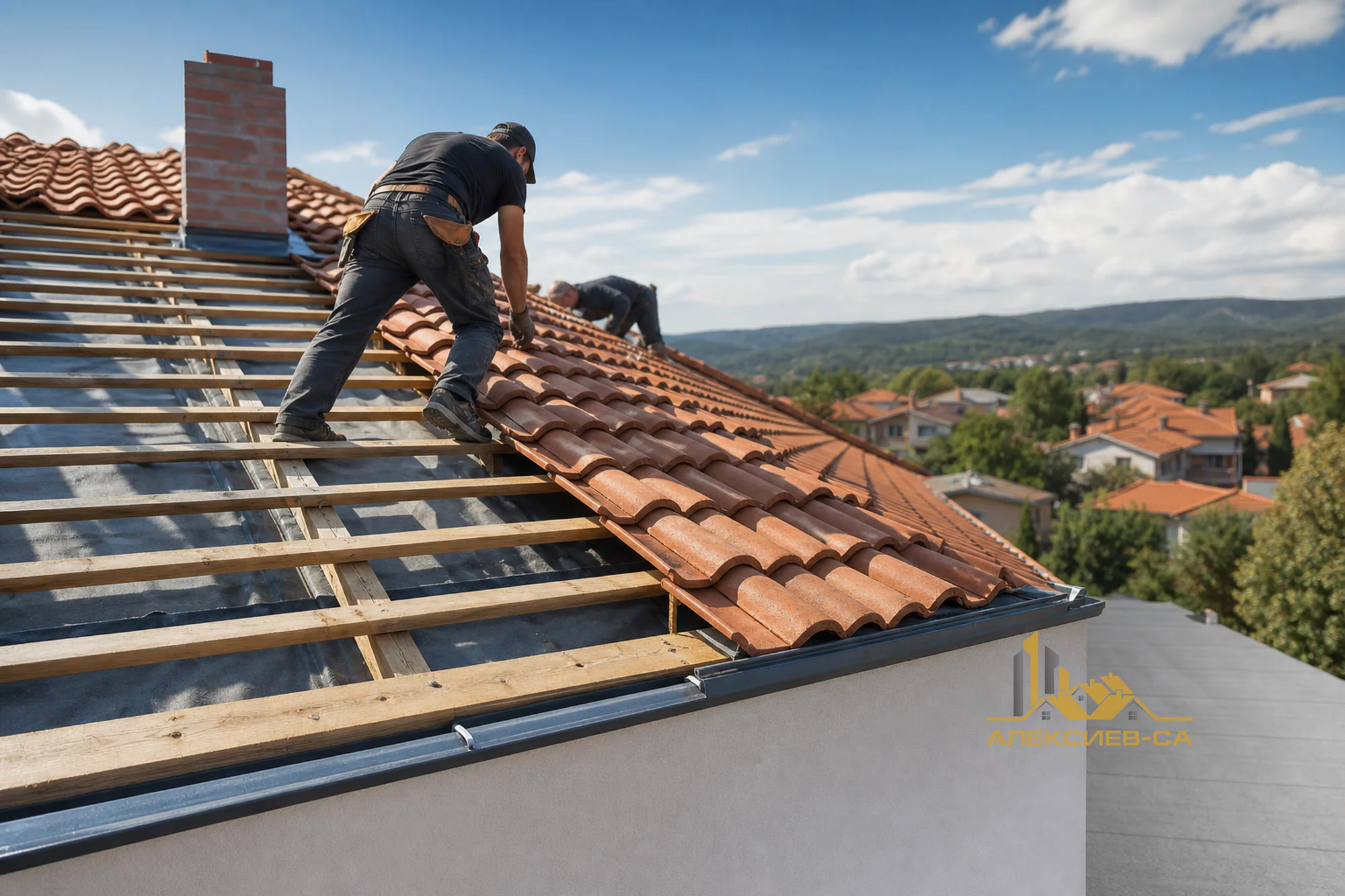
Two roofs with similar areas may require completely different work. On one roof, the cause of a leak may be a locally displaced tile or a compromised detail around a chimney. On another, water may already have reached the timber elements, damaged battens, affected the under-roof layer or revealed drainage problems. In the first case, a limited repair may be possible. In the second, more extensive restoration is needed so that only the symptom is not concealed.
This is why a professional assessment starts with an inspection and clarification of the actual condition. The purpose is not simply to state a final amount, but to explain what work is needed, which materials will be included and what result is expected. This allows a property owner to compare offers by their content and scope rather than by one number alone.
What is checked during a roof inspection?
An inspection is the basis for a reliable offer because a leak does not always show the exact place where water enters. Water can travel along elements and become visible inside a room some distance away from the true cause. For that reason, the inspection follows the logic of the entire roof system rather than focusing only on the visible ceiling stain.
The following questions are commonly considered:
- What type of roof is it and what is its pitch?
- What is the condition of the tiles or other final roof covering?
- Are there broken, displaced, missing or heavily worn elements?
- What is the condition of the ridge, eaves, valleys, caps and transitions between different roof planes?
- Are there signs of issues in the timber structure, battens or roof decking where it is accessible?
- Is there a functioning waterproofing or under-roof layer, and what condition is it in?
- How are connections around chimneys, roof windows, vents and walls executed?
- Do the gutters and downpipes carry water away without standing water or overflow?
- Is there safe and practical access for work, delivery and removal of waste?
On an older roof, visible tiles are only one part of the picture. Where there are signs of prolonged dampness, deformation or unstable areas, the elements beneath the covering may need to be checked. This is where it is determined whether the task is replacing individual components or carrying out a repair that affects deeper layers.
It is also important for the inspection to identify the cause of the issue. Replacing a few tiles will not permanently solve a situation caused by faulty flashing or blocked drainage. Conversely, fully opening a roof may not be necessary where the defect is clearly localised and the remaining elements are in good condition. A sound assessment seeks a balance between sufficient repair and unnecessary replacement.
The main factors that determine the cost
Area matters, but it is not the only factor and is often not the most decisive one. The final cost depends on the combination of materials, labour, execution difficulty, required details and additional activities. The following groups of factors commonly have the greatest influence.
Condition of the supporting and timber structure
When the structure is stable and the issue is in the upper layers, the repair is usually more limited. If there are damaged beams, rafters, purlins, battens or other timber elements, the work requires careful opening, replacement or reinforcement according to the condition found. This affects both the amount of material and the time and complexity of execution.
Not every darkened area of timber means complete replacement is required, but any concern about damage deserves assessment. Repairing the exterior layer without removing an active source of moisture can lead to a recurring problem. For this reason, the structural element should be considered separately from the cosmetic appearance of the roof covering.
Type and condition of the roof covering
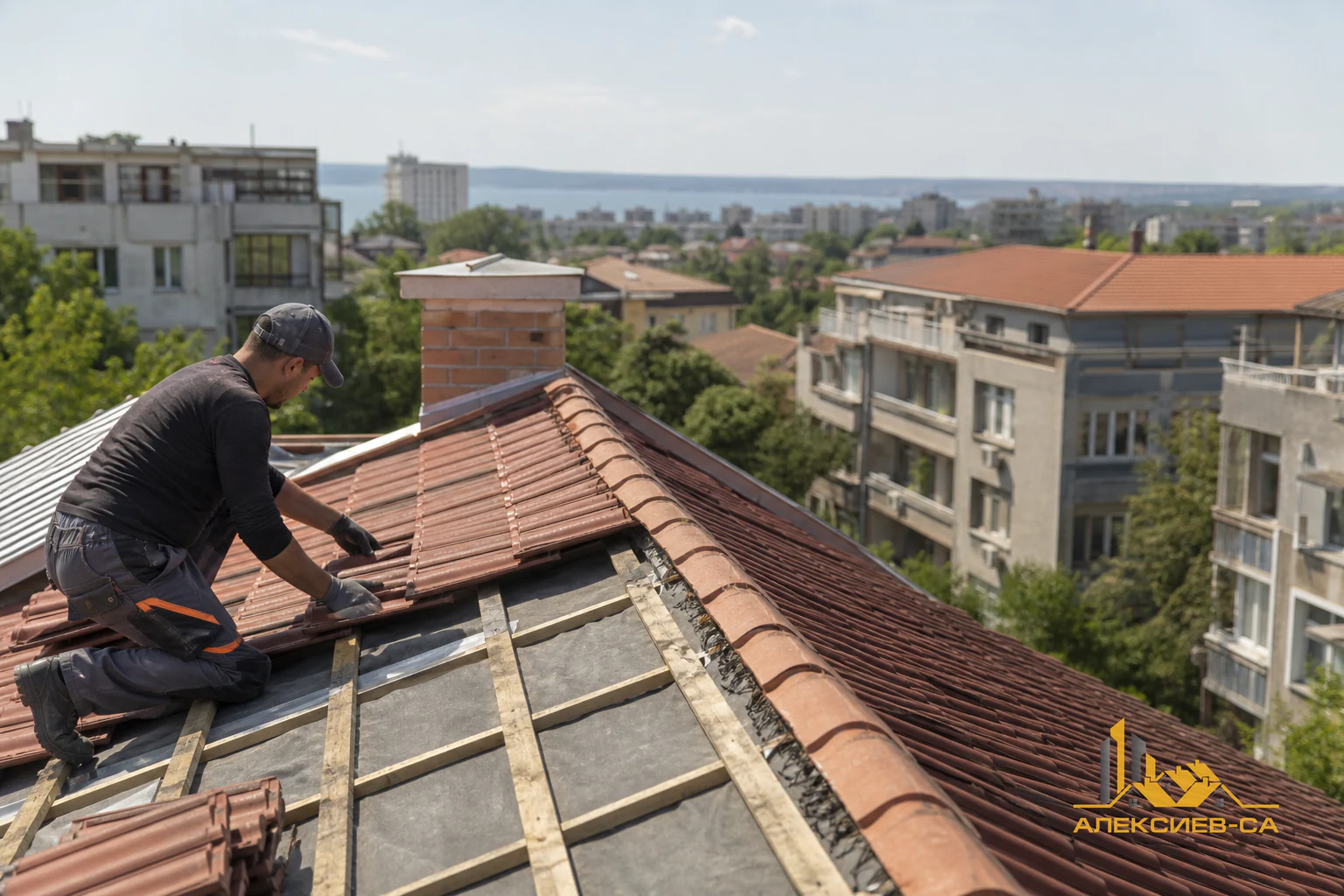
Tiles, metal sheets, bituminous materials and other roof coverings have different installation methods, different details and different requirements for partial replacement. On a tiled roof, it is not only the number of elements to be replaced that matters, but also whether new ones can be integrated with the existing covering, the condition of the fixings and the arrangement around critical areas.
When repairing a covering, it is important to determine whether the problem is isolated, local or systemic. If a large proportion of elements are brittle, displaced or have compromised overlaps, replacing a small section may be a temporary measure. If the rest of the covering is sound, a local repair may be a sensible solution. The correct approach depends on what is found on site.
Waterproofing and under-roof layers
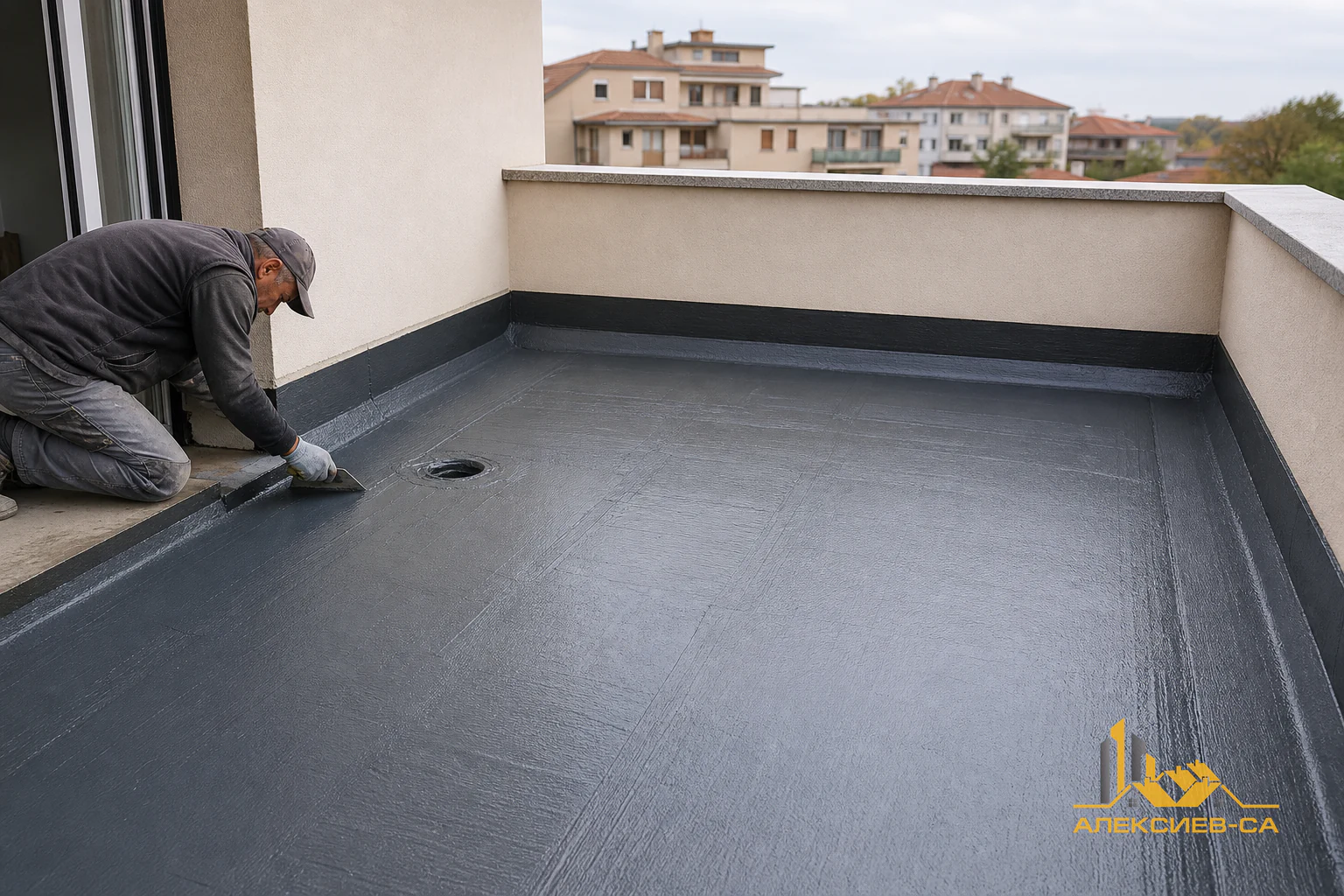
Waterproofing plays a key role on flat roofs and in the details of pitched roofs. In pitched systems, the under-roof layer can limit the consequences of water getting beneath the tiles, but only if it has been installed correctly and is not compromised. On a flat roof, the overall condition of the membrane, seams, upstands, drains, drainage points and wall connections may be decisive.
The cost changes according to whether a local repair, restoration of a detail, substrate preparation or work across a larger area is required. The visible layer should not be assessed on its own. The substrate, drainage falls and transitions to vertical elements are equally important for the durability of the solution.
Flashings, chimneys, valleys and other critical details
Many leaks occur not in the middle of a roof plane but around interruptions and transitions. Chimneys, dormers, roof windows, valleys, upstands, wall connections, ventilation outlets and antenna penetrations are all places where water needs to be directed correctly. If metal flashing is loose, corroded, improperly lapped or damaged, it can cause a leak even when the main covering is relatively well preserved.
These details often require more precision than large, even roof areas. It is useful for them to be listed separately in an offer because this makes clear exactly what will be repaired and why the particular area affects the overall cost.
Gutters, downpipes and drainage
A roof does not end with its final covering. Water must be collected and carried away in a controlled manner. Blocked, sagging, incorrectly sloped or damaged gutters can lead to overflow, wet eaves and façade sections, as well as additional stress on edge roof details.
The assessment should consider fixings, slope, connections, the condition of downpipes and the ability to clean the system. Sometimes the issue is mainly drainage rather than the roof covering. In other cases, gutters are only one of several elements that need repair together.
Access, height and work organisation
Roof work involves safe access, moving materials and protecting the area around the building. Height, pitch, property layout, the presence of a yard, a narrow street or limited storage space can change the organisation required. The need for additional access equipment or more complex logistical planning is also part of the actual scope.
This factor does not mean every difficult-to-access property will necessarily require a major repair. It does explain why two otherwise similar tasks may not be assessed in exactly the same way. Practical and safe organisation is a necessary part of quality execution.
Local, partial or complete repair: what is the difference?
Before comparing offers, it is important to understand what type of repair is being proposed. The word “repair” can describe very different activities, and the distinction is directly connected to cost.
A local repair addresses a specific identified defect. For example, it may include replacement and re-laying of a limited number of tiles, repair of a small flashing, restoration of a section of waterproofing or cleaning and correction of drainage. It is appropriate when the cause is clear, the damage is limited and neighbouring elements are in sound condition.
A partial repair covers an entire problem area or one layer of the system. It may include replacing battens in one section, repairing an eave, restoring a larger area around a chimney, partially replacing under-roof layers or repairing a particular roof plane. It is needed when the defect is not isolated but does not affect the entire roof.
A complete repair is considered when many components are worn or damaged, when leaks occur in multiple locations, when structural and waterproofing issues have accumulated, or when local repairs no longer provide a reliable outcome. Such a scope usually involves systematic work through the layers and details rather than simply replacing the visible covering.
The most economical option is not always the one with the smallest initial scope. If a repair leaves the cause of a leak unresolved, the expense may recur. At the same time, complete replacement should not automatically be treated as the only solution. Following an inspection, the option should be selected to suit the actual condition and the owner’s objective.
How should you read a roof repair offer?
Comparing offers only by their total final price often causes confusion. One offer may appear lower because it includes labour only or because important details, removal work, waste disposal, replacement of damaged elements or restoration of drainage have not been allowed for. It is more useful to request a clear scope that shows what stands behind the amount.
A well-structured proposal commonly clarifies:
- What problem has been identified and which areas will be treated.
- What removal work is needed, where this is anticipated.
- Which materials and layers will be repaired, replaced or restored.
- How critical details around chimneys, walls, valleys or openings will be resolved.
- What is included for gutters, downpipes and other drainage elements.
- Whether delivery, handling, cleaning and waste removal are included where required.
- What assumptions have been made and how hidden damage found after opening will be addressed.
It is especially useful to distinguish labour and materials where possible. This helps the owner understand what is being received and provides a basis for sensible comparison. Vague wording such as “roof repair” without a description can hide substantial differences between two proposals.
For a more complex property, it may be sensible for the offer to separate the work into stages: opening and assessing the condition, repairing the substrate or structure where needed, restoring protective layers, covering and details, drainage, and final cleaning. This is not essential for every small repair, but it helps to track the logic of execution on a larger scope.
How can you avoid a misleadingly low price?
A low price is not a problem by itself. It may result from a limited and fully sufficient scope, effective organisation or an appropriate solution for the specific defect. The risk arises when it is unclear what has been excluded from the proposal or when the promised repair does not address the cause of the issue.
Take care if an offer does not state how valleys, chimneys, flashings and drainage will be handled while those areas show visible risks during inspection. A proposal that gives a final price without clarifying the condition beneath the covering on an old or heavily damaged roof also deserves attention. Hidden damage cannot be predicted completely, but good communication explains how it will be discussed if it is found.
A practical approach is to ask several specific questions: What is the likely cause of the leak? Which layers will be repaired? What will happen if damaged battens or timber elements are found when the roof is opened? Are flashings and drainage included? How will the building and surrounding area be protected during work? The answers show whether the proposal is considered and comparable.
Do not choose solely by the lowest figure, but do not automatically treat the highest price as proof of quality either. Look for clear diagnosis, a specific scope, understandable materials and good communication. These are more reliable decision criteria than a general promise of a “full repair”.
When is it appropriate to plan the repair?
Roof work can be carried out most predictably in suitable and stable weather. Dry periods make inspection, opening of layers and proper execution of many repair operations easier. Planning before seasons with frequent rainfall may reduce the chance that a small issue develops into more serious damage.
This does not mean that an active leak should wait for an ideal season. When there is an ongoing issue, the first task is to limit water entry and assess the cause. Temporary protection may be necessary until conditions allow permanent work. It is important not to treat a temporary measure as a final solution if the underlying defect remains.
It is useful to observe the roof after strong wind, heavy rain or snowmelt. New ceiling marks, drips around a chimney, overflowing gutters, displaced tiles, wet eaves and falling pieces are signs that a timely inspection should be arranged. Early action can often allow more local intervention before moisture reaches additional layers.
For prevention, gutters can be checked periodically for leaves and debris, critical details can be observed from a safe position, and changes inside the building can be monitored. Do not attempt unsafe access to the roof without the necessary conditions and preparation. When in doubt, it is wiser to have the condition assessed by a specialist on site.
A practical plan from the first leak to a specific offer
When you notice a problem, an organised approach helps prevent decisions being made under pressure. Start by gathering basic information: where the leak appears, after what weather it occurs, whether it repeats during a particular wind direction or rainfall, and whether there are visible changes to the roof or gutters. Photographs of moisture marks and accessible exterior areas can be useful in an initial conversation, but they do not replace an inspection.
Next, arrange an inspection to clarify the roof type, access, visible defects and likely risk areas. Ask for the proposal to state clearly what the repair includes and what cannot be confirmed before opening. If there are different possible solutions, it is useful to understand the difference between them: what issue each one solves, what scope it has and what its limitations are.
Before work begins, clarify site organisation, protection of adjacent areas, access for materials and the method of communication if unexpected findings arise. With roofs, this is particularly important because part of the actual condition becomes visible only after the affected section is carefully opened.
After the repair, observe whether drainage works normally and whether signs of moisture appear during later rainfall. Maintaining gutters and responding promptly to new visible defects are part of caring for the roof system. The aim is not only to stop the current leak, but to ensure water is carried away reliably and the roof remains protected as a system.
Have you noticed a leak, displaced tiles or a gutter problem? Contact us to arrange an inspection and discuss the suitable scope for roof repair in Varna and the surrounding region.
Frequently asked questions
Frequently asked questions
Can you receive an exact roof repair price without an inspection?
Only an indicative guideline can be given by phone or from photographs. An exact offer requires an inspection because the condition beneath the covering, the details and site access often change the real scope of the work.
What determines whether the repair will be local or more extensive?
The decision depends on the cause of the issue, the size of the damaged area and the condition of adjacent layers. A local repair is possible for a limited defect, while widespread moisture or damaged elements require a broader scope.
Is replacing broken tiles alone enough when there is a leak?
Sometimes it is, if those tiles are the cause and the layers beneath are sound. With a leak around a chimney, valley, flashing or compromised waterproofing, tile replacement alone may not solve the problem permanently.
Why do gutters affect the cost and condition of a roof?
Gutters and downpipes carry water away from the roof area. When they are blocked, overflowing or poorly fixed, water can wet eaves and façades, so checking and repairing drainage where needed is an important part of the assessment.
When is the best time to carry out a roof repair?
Work is most predictable in stable dry weather. With an active leak, however, do not delay assessment: prompt temporary protection may be needed, followed by permanent repair when conditions are suitable.
What should you compare between two roof repair offers?
Compare more than the total amount: review removal work, materials, structural elements, waterproofing, flashings, gutters, cleaning and the approach to hidden damage. This helps you see whether the proposals are genuinely comparable.